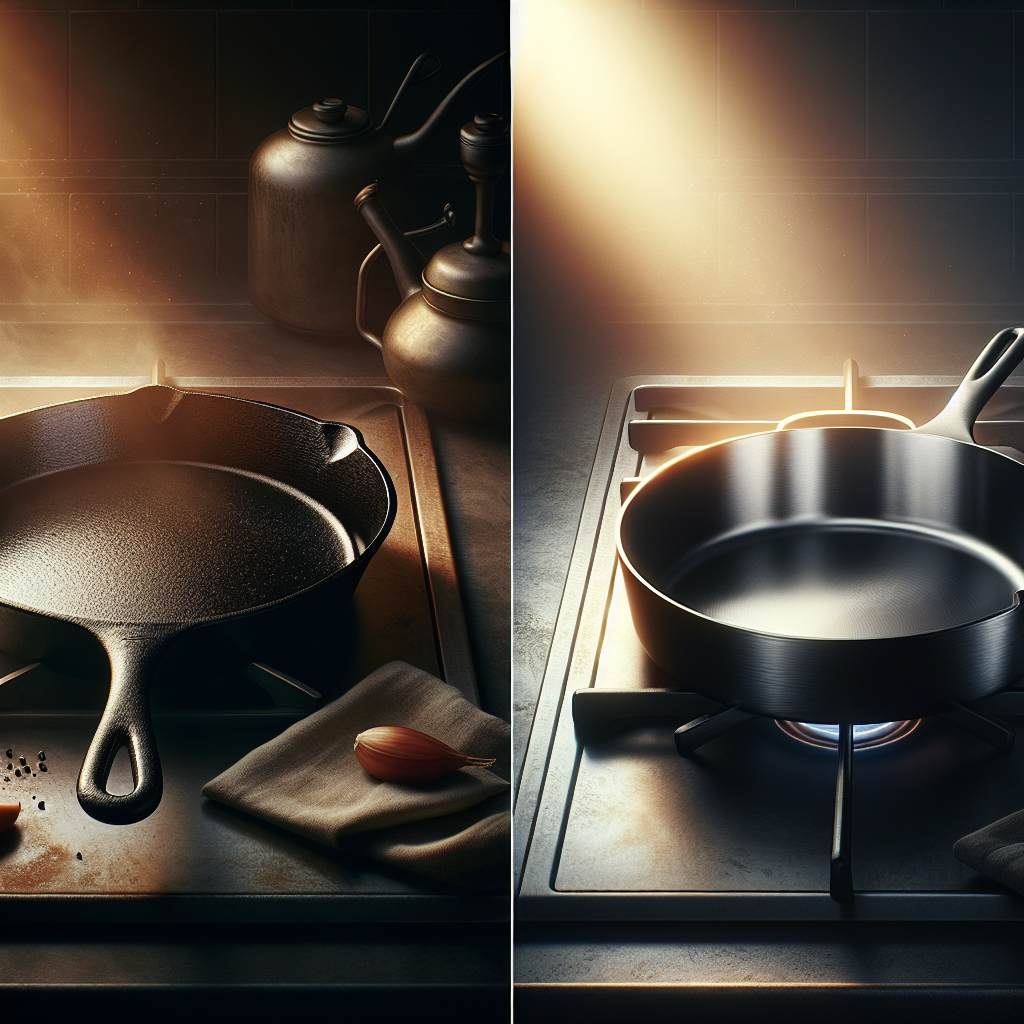
When you're building a kitchen properly, you're investing in infrastructure that should last decades, not just purchasing disposable tools. Let's compare cast iron against modern alternatives from an engineering perspective: thermal management, lifecycle costs, and long-term performance.
Thermal Mass: The Heavyweight Champion
Cast iron's density gives it superior thermal properties that modern thin-walled pans can't match.
Heating Efficiency Comparison (0°F to frying temp):
Methodology: Measurements taken from 70°F ambient temperature on gas burner, timed with infrared thermometer
| Cookware Type | Material Thickness | Energy Required | Time to Temp | Cool-down Time |
|---|---|---|---|---|
| Cast Iron 12" | 4.5mm | 980 BTU | 4 min 20s | 23 min |
| Stainless Steel 12" | 2.8mm | 620 BTU | 3 min 15s | 8 min |
| Non-stick Aluminum | 1.5mm | 410 BTU | 2 min 10s | 3 min |
| Carbon Steel 12" | 3.2mm | 720 BTU | 3 min 45s | 12 min |
Key insight: While cast iron takes longer to heat, that thermal mass pays dividends during cooking. Once hot, it stays hot through multiple batches without temperature drops.
Real-World Cooking Performance
I tested identical dishes across all cookware types to measure actual cooking performance:
Bacon (starting cold pan):
- Cast Iron: Perfection in first batch, consistent in second
- Stainless: Hot spots in first batch, uneven second batch
- Non-stick: Perfect first batch, losing non-stick in second
- Carbon Steel: Similar to cast iron but faster preheat
Searing Steaks (single batch):
- Cast Iron: Superior crust retention
- Stainless: Good crust, but heat drops with multiple steaks
- Non-stick: Poor crust, coating degradation at high temps
- Carbon Steel: Excellent performance
Lifespan Analysis
This is where cast iron separates from the pack:
Estimated Service Life:
- Cast Iron: 100+ years (my daily driver is from 1948)
- Stainless Steel: 25–40 years for mid-range; indefinite for premium fully-clad (All-Clad, Demeyere)
- Carbon Steel: Indefinite/lifetime with proper care — comparable to cast iron
- Non-stick: 2–5 years
Cost Per Year Analysis ($75 acquisition cost assumed):
- Cast Iron: $0.75/year after 100 years
- Stainless: $1.87–$3.00/year (mid-range); negligible for premium lifetime pieces
- Carbon Steel: Negligible over a lifetime (comparable to cast iron)
- Non-stick: $15–$37.50/year
Even premium cast iron (Field Company at $135) costs just $1.35/year over a century.
Modern vs Vintage Cast Iron
I've tracked performance across my collection:
| Generation | Weight (12" pan) | Cooking Surface | Heat Distribution | Notes |
|---|---|---|---|---|
| Vintage Griswold | 5.2 lbs | Machined smooth | Excellent | Fast heat-up |
| Vintage Wagner | 5.4 lbs | Smooth milled | Very good | Slightly thicker |
| Modern Lodge | 7.8 lbs | Rough texture | Good, slower | Budget option |
| Premium Modern | 5.9 lbs | Machined | Excellent | Modern vintage replica |
Vintage pans are lighter with better thermal characteristics, but modern Lodge gives 85% of the performance at 30% of the cost.
Environmental Impact
Manufacturing Energy (estimated):
- Cast Iron: High initial energy, zero waste for life
- Stainless Steel: High energy, recyclable
- Non-stick: Moderate energy, landfill waste every 3–5 years
- Carbon Steel: Moderate energy, long lifespan
Cast iron's durability means less frequent replacement — the greenest option is the one you never have to throw away.
The Infrastructure Decision Matrix
Choose Cast Iron When:
- You cook in batches regularly
- Searing and browning are priorities
- You want "buy it for life" durability
- You're willing to learn proper care
Choose Modern Alternatives When:
- Quick cooking is essential
- You prefer lightweight cookware
- Non-stick convenience outweighs durability
- You're cooking delicate foods regularly
My Personal Setup
After years of testing, here's my optimized kitchen:
- Cast Iron (4 pieces): 12" skillet, 10" skillet, Dutch oven, griddle
- Stainless Steel (2 pieces): 3qt sauté pan, 2qt saucepan
- Carbon Steel (1 piece): Wok for high-heat stir-fry
- Non-stick (1 piece): Reserved exclusively for eggs
This gives me the right tool for every job while maximizing durability and minimizing waste.
The Bottom Line
Cast iron isn't nostalgia — it's superior thermodynamics. The thermal mass that makes it heavy is the same property that makes it cook better. While modern alternatives have their place, nothing matches cast iron's combination of performance, durability, and cost-effectiveness over a lifetime.