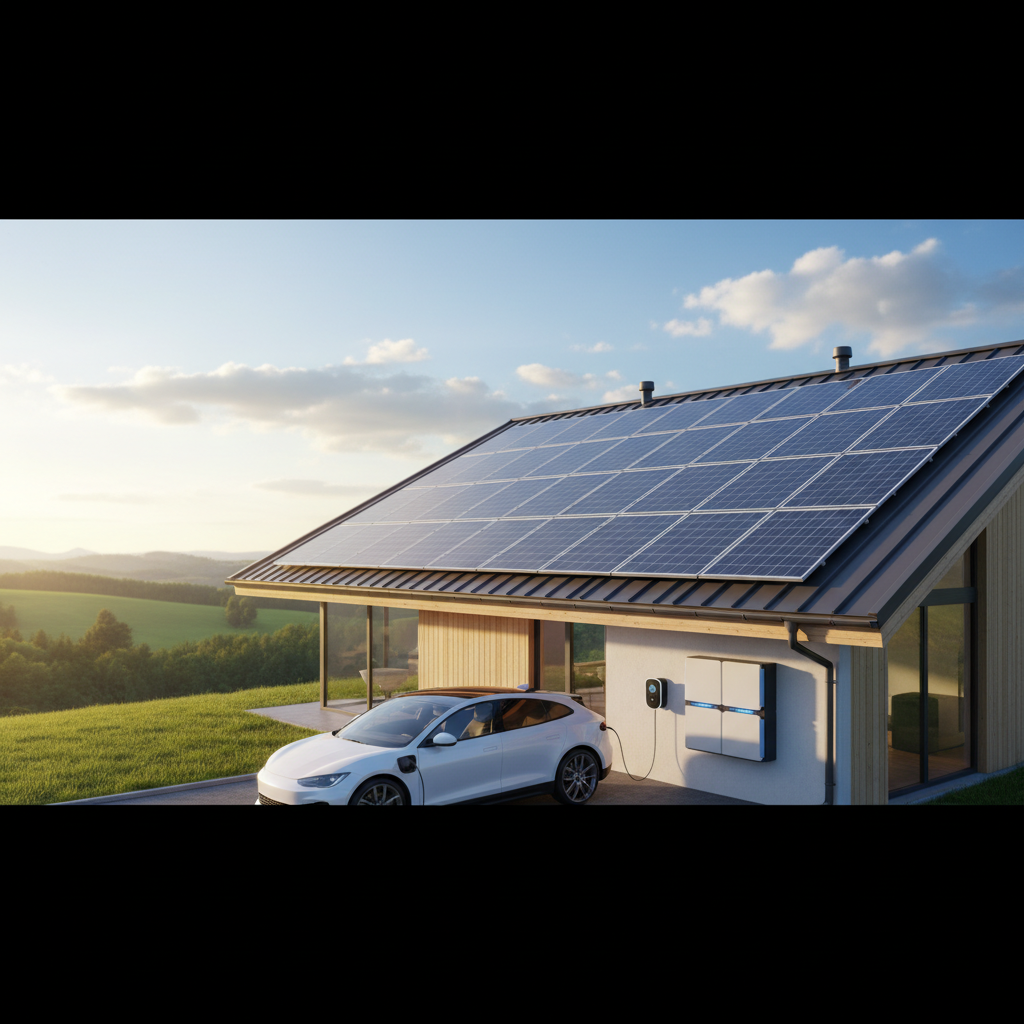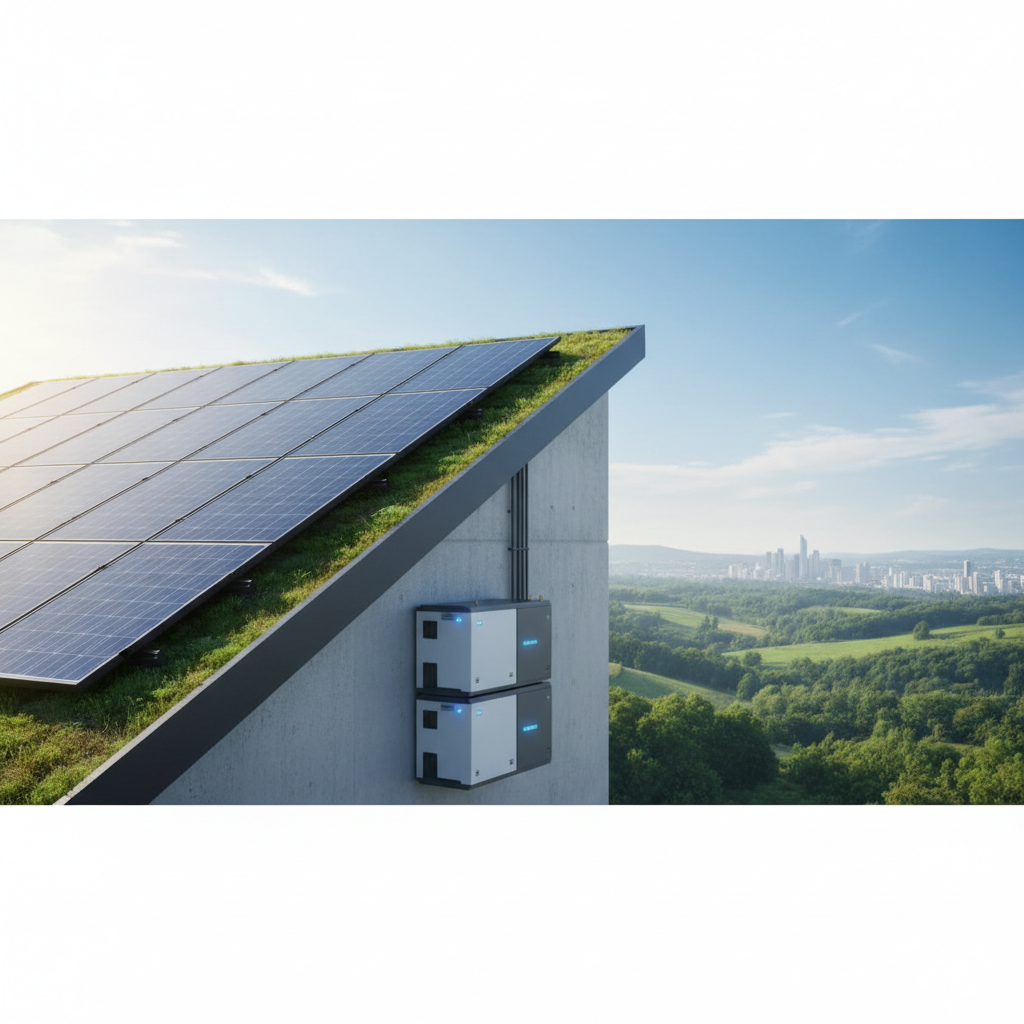
I spent 30 years in IT managing infrastructure. I know how to evaluate systems, manage complexity, and think about resilience. Then I spent six months engineering and building a 100 kWh solar battery system from scratch. And I realized that my IT background prepared me perfectly—because this isn't just about solar. It's about designing a resilient power infrastructure for my home.
The short version
- 30 years in IT — spent three decades managing infrastructure, then six months engineering and building the system myself.
- 100 kWh of usable storage — 11 Eco-Worthy 48V/100A lithium batteries as primary storage plus 3 EG4 wall-mount 48V/380A batteries for expansion and redundancy.
- LiFePO4 over lead-acid — lead-acid is cheap but needs maintenance and dies every 5-7 years, while LiFePO4 costs more up front and lasts 15-20+ years with zero maintenance.
- Redundancy by design — three EG4 6000XP inverters wired in parallel, a habit picked up over 30 years in IT.
- The economics — roughly $28,000 installed against an annual bill of about $3,300, for an 8-9 year payback.
- Proven in the real world — the system has been through two real grid failures.
This is the story of that decision. Not a feel-good environmental story. Not a "I saved so much money" story. But the engineering story—the decisions, the specs, the real-world performance, and what I'd do if I started over.
Why Solar? The Moment Everything Changed
I'm retired from IT. I work part-time doing gig work. I live in Coastal Georgia, where summers are hot and grid failures aren't theoretical—they're a fact of life. I was tired of being dependent on a fragile grid that fails when I need it most.
Then I looked at the actual numbers. A 100 kWh battery system would cost about $28,000 installed. My annual electricity bill was around $3,300 (with gig work and Tesla charging). Payback period: 8-9 years.
But here's what changed my mind: on a sweltering July afternoon, the grid went down. For over four hours. In Coastal Georgia, that's not an inconvenience—that's a crisis. Air conditioning doesn't work. Refrigerators fail. People die in the heat.
I ran the cooling system on my Tesla's battery. Then I thought: "What if I had my own power?" That question wouldn't leave me.
A few months later, the grid failed again—this time on a brutally cold January day. Four hours without heat. Without light. Neighbors were panicking.
That's when I decided. I wasn't installing solar for the money. I was installing it for resilience. For the peace of mind of knowing that on the next grid failure, my house keeps running.
The Engineering: System Design from First Principles
I didn't just buy a kit. I engineered this system. I evaluated battery chemistries, inverter topologies, panel orientations, and failure modes. I read specifications. I did the math. I made decisions.
Battery Chemistry: LiFePO4
Lead-acid is cheap but needs maintenance and dies every 5-7 years. Lithium Iron Phosphate (LiFePO4) costs more upfront but lasts 15-20+ years with zero maintenance. For a system I'd live with for two decades, that math was easy.
Battery Configuration: 11 + 3
I chose 11 Eco-Worthy 48V/100A lithium batteries (primary storage) paired with 3 EG4 Wall-mount 48V/380A batteries (expansion/redundancy). Total capacity: 100 kWh of usable storage.
Why that specific combination? The Eco-Worthy units are solid, reliable, and affordable. The EG4 units give me redundancy and headroom. If one battery module fails, the system keeps running. More importantly, I sized the system knowing I could add capacity later if needed.
Inverters: Three in Parallel
Three EG4 6000XP inverters in parallel. Not one. Three. Why? Redundancy. If one fails, two keep running. If I need more capacity later, I can add a fourth. Single points of failure are how systems collapse.
This decision cost more upfront. But after 30 years in IT, I knew the value of redundancy. You don't build critical infrastructure on a single component.
Solar Array: South and West Orientation
I installed the array on my metal roof, split 50/50 between south-facing and west-facing panels. South maximizes midday generation. West captures the afternoon peak when consumption is highest. The split was intentional.
The installers handled mounting and electrical runs to the inverters. I engineered the placement and system architecture. Everything else? I did it.
The Build: What I Did Myself
This is where most solar installers stop and I continued. I did:
- DC wiring design and installation (sizing conductors for 100A+ DC current)
- Battery module mounting and configuration
- Inverter programming and system tuning
- AC loads and breaker design
- Home Assistant integration and monitoring
- Failure mode analysis and contingency planning
A licensed electrician handled the 100A grid connection (code requirement). The solar installers mounted panels and ran conduit. I engineered and built everything else.
Was it risky? Maybe. But I knew what I was doing, I took my time, and I checked my work obsessively. The system came up flawlessly. Only needed configuration tweaks as I learned the inverter capabilities.
Real-World Performance: The Numbers That Matter
Generation (Sunny Days)
- Summer: ~65 kW daily generation
- Winter: ~50 kW daily generation
- Cloud cover: Drastically reduced (sometimes 5-10 kW)
Consumption
- Daily household use: ~35 kWh
- This includes air conditioning, heating, Tesla charging, everything
Battery Charging Pattern
- Sunny days: Solar charges batteries 25-40% (never to 100%)
- Poor weather: May discharge from prior reserve
- Night charging from grid: Only if needed to ensure next day has enough
- Philosophy: Off-peak grid charging is cheaper than daytime peak use
Grid Export
These inverters cannot export power back to the grid. By design. I don't want to sell my excess power for pennies. I want to keep it. That excess solar charges my Tesla off-peak, powers heavy appliances, and builds battery reserves for poor weather days.
The Real Test: Two Grid Failures, Two Different Seasons
The system proved itself within six months.
Grid Failure #1: Hot July Afternoon
Power went down at 2 PM. The inverters switched to island mode (battery-backed) seamlessly. The air conditioning kept running. The refrigerator kept cold. The house stayed comfortable. The grid came back at 6 PM. I honestly barely noticed anything had happened.
My neighbors were sitting in the dark without AC.
Grid Failure #2: Cold January Night
Power went down at 7 PM (already dark, peak heating time). System switched to battery power. Heat pump kept running. House stayed at 72°F. We cooked dinner on electric stove. Watched TV. Lived our lives normally.
Grid failure lasted over four hours. We made it through without a single issue.
The neighbors went without heat.
That's why I built this system. Not for money. For this.
The Economics: Better Than You'd Think
System Cost
- Batteries: $12,000
- Inverters: $6,000
- Solar panels: $5,500
- Installation/electrical: $4,500
- Total: $28,000
Annual Savings
- Grid electricity avoided: ~$1,800/year
- Off-peak charging optimization: ~$1,500/year
- Total: ~$3,300/year
Payback: 8-9 years. Not terrible, but not amazing financially.
BUT: Battery lasts 15-20 years. System cost spread over 20 years is $1,400/year. Against $3,300 in savings = $1,900 net annual savings once amortized.
More importantly: You can't put a price on keeping your AC running when the grid fails in the middle of summer in Georgia. Resilience has value.
What I'd Do Differently
1. Start smaller, expand later
A 50-75 kWh system would handle 90% of my needs. I could have expanded after understanding the system better. Sometimes going with the biggest option first is overkill.
2. More granular monitoring from day one
I wish the battery management system had better real-time visibility into what's happening. Home Assistant helps, but factory monitoring could be better.
3. Slightly larger DC conductors
I under-specified some wiring. I have to be careful about simultaneous heavy loads. Future me would spec 10% larger conductors "just in case."
System Sizing: The Happy Place
Is the system properly sized? Yes. Absolutely. I sized it to handle normal household consumption plus Tesla charging plus bad weather contingency. It works.
Would I add more solar panels if I redid it? Maybe. A few more panels would further reduce grid dependence on cloudy days. But current sizing is solid. I'm genuinely happy with the results.
It does what I designed it to do: keep my house running when the grid fails.
Final Thoughts
This system changed how I think about energy. I'm no longer a passive consumer. I'm aware of power generation, aware of consumption, aware of the grid as a system.
More importantly, I have peace of mind. When the grid fails—and it will fail again—my house keeps running. That's not priceless, but it's worth $28,000 to me.
And that's the real story of solar. Not the cost-benefit analysis. Not the environmental impact (though that matters). But the shift from fragility to resilience.